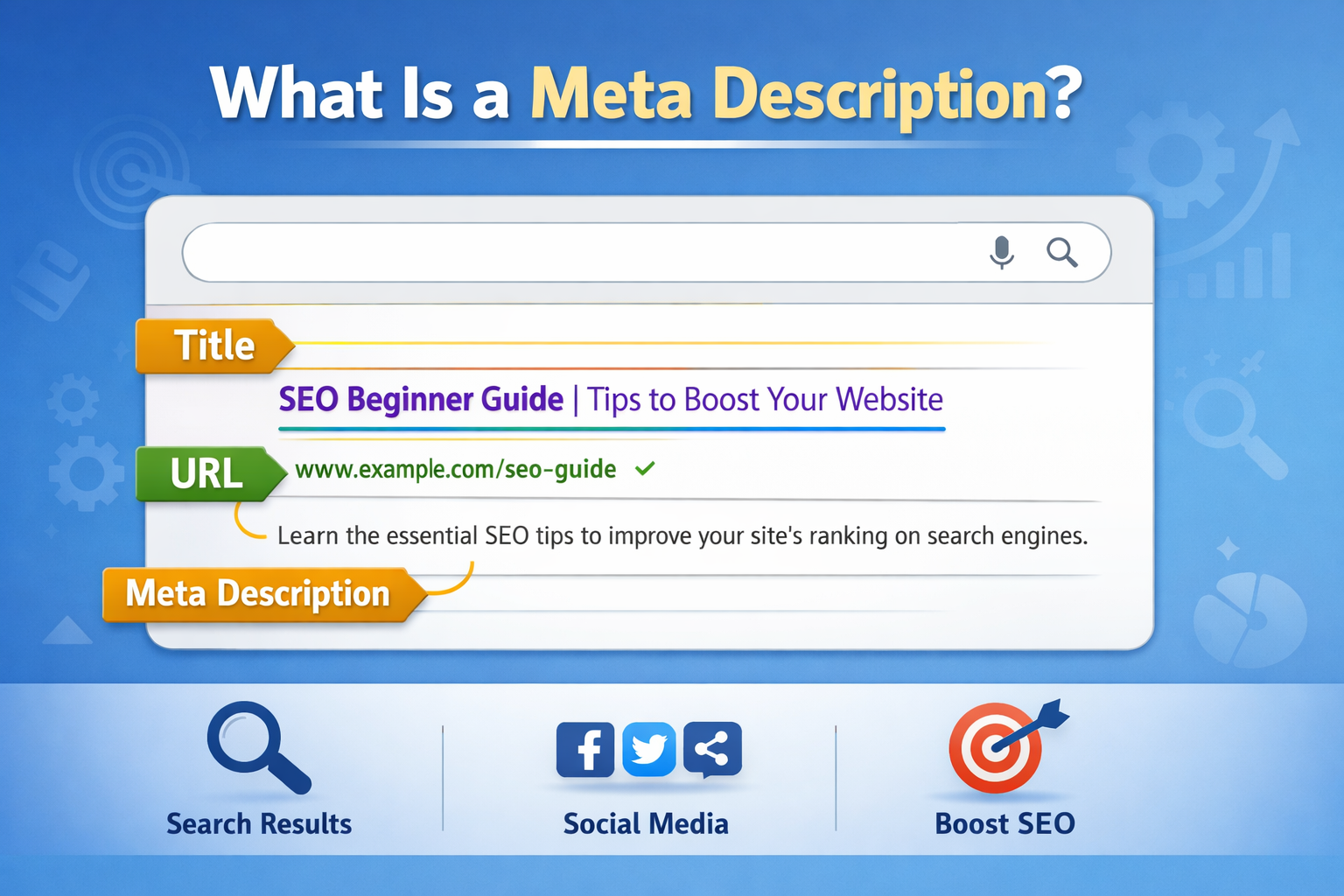
What is a Meta Description in SEO?
A meta description is a short summary of a webpage’s content, typically found in the HTML code of the page. It’s the small snippet of text you see under a link in the search engine results pages (SERPs). Think of it as a teaser or a movie trailer, giving users a glimpse into what they can expect when they click your link.
Even though meta descriptions don’t directly affect a webpage’s ranking in search engines, they are a key factor in encouraging users to click on your link. A strong meta description can improve your click-through rate (CTR) and attract more visitors to your site, which is an essential part of on-page SEO.
Does Google Always Use Your Meta Description?
Google doesn’t always use your meta description in search results. Quite often they will rewrites it.
Why does Google rewrite meta descriptions?
Google’s goal is simple, you need to match the user’s search intent as closely as possible. If your meta description doesn’t align with what someone is searching for, Google may replace it with a more relevant snippet.
Common reasons include:
- Your description doesn’t include the search query
- It’s too vague or generic
- It doesn’t reflect the actual page content
- Google finds a more relevant sentence on your page
Based on industry studies and real-world SEO observations, Google uses the meta description you write only around 30%–60% of the time. The rest of the time, it generates its own snippet from your page content.
Meta Description Example
Here’s an example of a meta description for a page that’s about How Search Engines Work: Beginner’s Guide

An example of a Meta Description in SERPs
In the search engine results, this meta description would appear underneath the title tag like so:

As you can see, the meta description appears below the title tag and it gives users a concise preview of what they’ll find on the page, encouraging them to click through. Speaking of title tags, which are another important on-page SEO element, are closely related to meta descriptions in terms of visibility and engagement in search results.
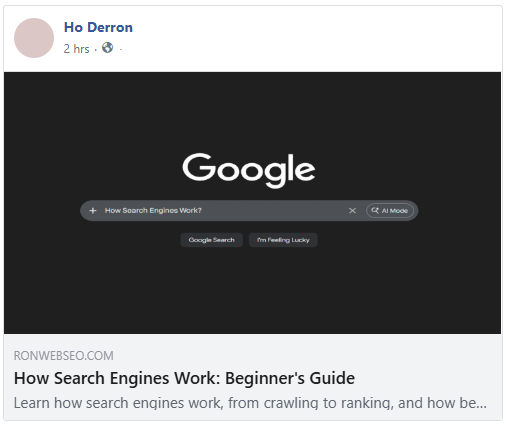
An example of Meta Description on Social Media
Meta descriptions don’t only appear in search engines, they also appear when a webpage is shared on social media platforms. For example, when someone shares a link on Facebook, the meta description can be pulled and displayed in the post preview. This makes your meta description an essential part of your social media strategy.
Why Is Meta Description So Important in SEO?
While meta descriptions don’t directly impact rankings, they play a vital role in search engine optimization (SEO) because they influence user behavior. Here’s why:
- Improves Click-Through Rate (CTR) – A well-crafted meta description can attract more clicks from search results. The more clicks you get, the more traffic your website receives, which can indirectly boost your rankings.
- Aligns with User Intent – Meta descriptions help search engines understand what a page is about, which can influence how relevant it appears for a given search query. This relevance is important for ranking, even if meta descriptions themselves aren’t a ranking factor.
- Enhances User Experience – A good meta description offers a preview of what the page is about, which improves the overall user experience and can help you build trust with your audience.
What Should a Quality Meta Description Include?
- Keep it Under 160 Characters – Stay within the 155-160 character range for optimal display.
- Integrate Your Primary Keyword – Naturally weave your target keyword or phrase to enhance relevance.
- Emphasize Key Features or Advantages – Highlight the most important details or benefits to catch the reader’s attention.
- Ensure the Description Matches the Page Content – Make sure the meta description accurately reflects what the page offers.
- Create a Unique Description for Every Page – Tailor each meta description to the specific content on that page to avoid duplication.
Common Meta Description Mistakes to Avoid
Overusing Keywords
Keyword stuffing doesn’t just make your meta description awkward. Make sure your meta description reads naturally while incorporating relevant keywords. Understanding how to balance keyword density is part of best SEO practices.
Making It Too Long or Too Short
Meta descriptions that exceed 160 characters can get cut off in search results. On the other hand, too-short descriptions may not give users enough information.
Being Vague or Generic
Avoid generic meta descriptions like “Welcome to our website.” Be specific and tell users what they can expect.
Failing to Align with Search Intent
If your meta description doesn’t match the user’s search intent, it will likely lead to a high bounce rate. Make sure your description speaks to what the user is looking for.
Duplicating Meta Descriptions
Reusing the same meta description across multiple pages can confuse search engines. Each page should have its own unique description, which ties back to the importance of understanding search intent.
Understanding Search Intent in Meta Descriptions
When writing your meta description, it’s important to understand the search intent behind the keywords you’re targeting. Are users looking for information? Do they want to make a purchase? Understanding this helps you write meta descriptions that match user expectations.
For example:
- Informational intent
- “How to make healthy smoothies” – the meta description could focus on offering tips or guides.
- Transactional intent
- “Buy organic smoothie ingredients” – the meta description might emphasize easy shopping or discounts.
By aligning your meta descriptions with the search intent, you increase the likelihood that users will click on your link.
Frequently Asked Questions
How long should a meta description be?
A meta description should ideally be between 150-160 characters.
Can I change my meta description after publishing?
Yes, you can update your meta description at any time. In fact, it’s a good practice to periodically review and optimize your meta descriptions for improved CTR.
Can I add emojis to meta descriptions?
While adding emojis to meta descriptions is not a standard SEO practice, it can help grab attention and stand out in search results. Just make sure the use of emojis aligns with your brand and content.
What if I don’t set a meta description?
If you don’t provide a meta description, search engines may automatically generate one based on the content of your page. However, it is not accurate on what your page is about