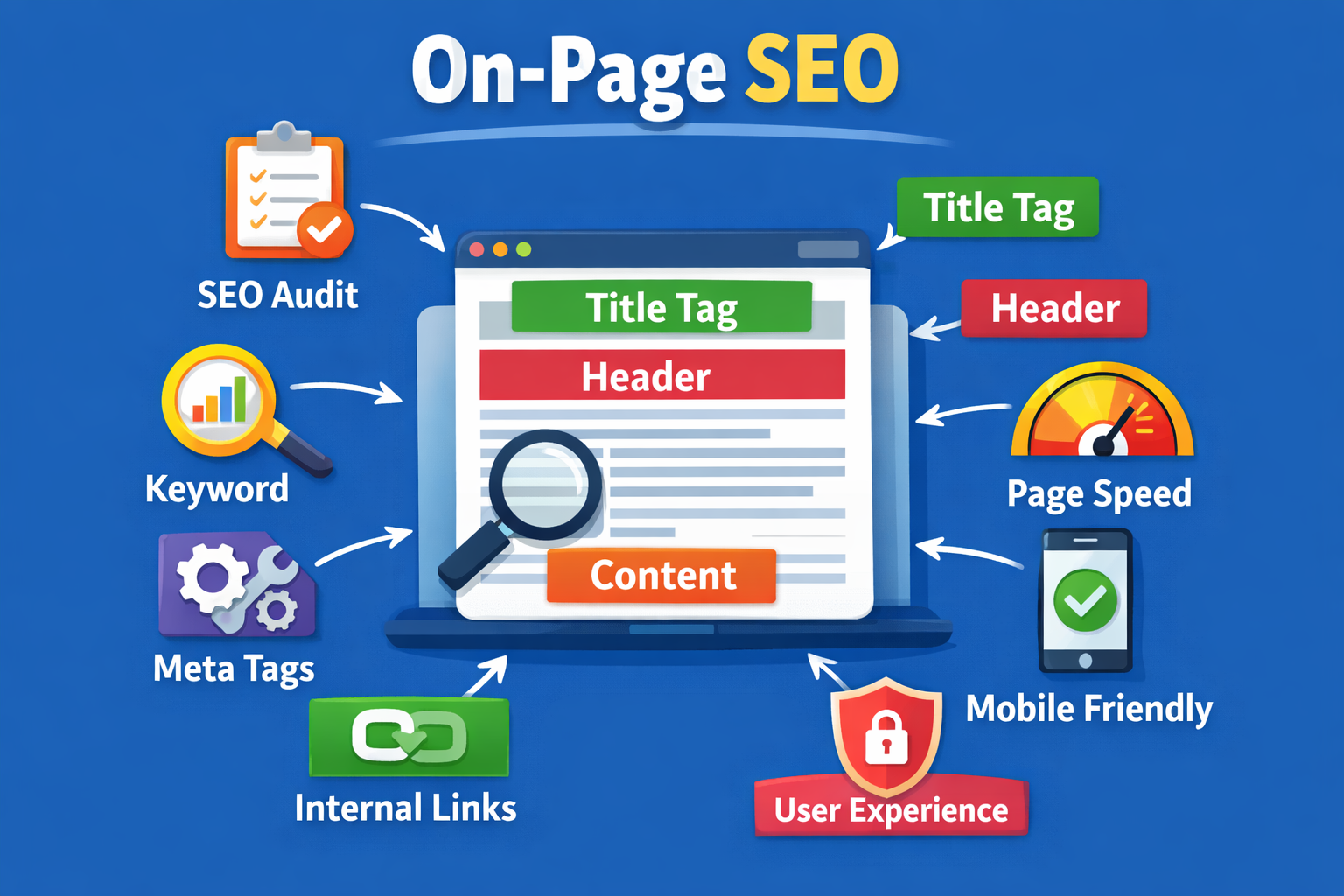
Definition:
On-page SEO is the practice of optimizing individual web pages to improve their search engine rankings and attract relevant traffic
If you want your website to rank on Google without relying on paid ads, mastering on-page SEO is essential. Whether you’re a beginner or a business owner in Malaysia, understanding how content, structure, and optimization work together is the foundation of long-term traffic.
Before we dive in, if you’re new, you may want to first understand how SEO works and why keyword research plays a critical role in ranking.
What Is On-Page SEO?
On-page SEO is the process of optimizing individual web pages to rank higher on search engines like Google. It includes improving content, HTML elements, and user experience to increase visibility and organic traffic.
Unlike off-page SEO, which focuses on backlinks, on-page SEO gives you full control over your website.
Why On-Page SEO Matters for Websites in Malaysia
For businesses targeting local customers, on-page SEO helps you:
- Rank for local searches like “SEO services Malaysia”
- Appear in Google search results faster
- Reduce reliance on paid ads like PPC (pay-per-click)
- Build long-term traffic instead of short-term campaigns
You can also explore the difference between SEO vs SEM to understand how both strategies work together.
Complete On-Page SEO Checklist (Step-by-Step)
1. Start with Keyword Research
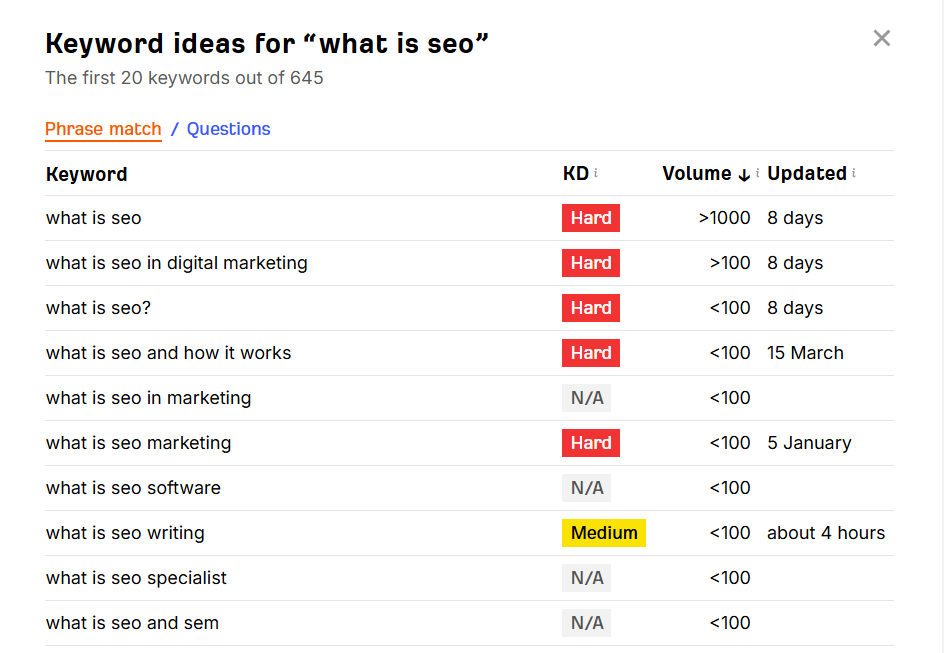
Every successful SEO strategy begins with keyword research.
Focus on:
- Long-tail keywords like “on-page SEO checklist Malaysia”
- Low competition, high intent keywords
- Local modifiers like “Malaysia”, “KL”, or “Selangor”
2. Optimize Your Title Tag

Your title tag is the first thing users see on Google.
Best practices:
- Keep it under 60 characters
- Place your main keyword at the beginning
- Make it clickable
Example:
On-Page SEO Checklist Malaysia (Step-by-Step Guide)
3. Write a Compelling Meta Description

Even though your meta description doesn’t directly affect rankings, it improves click-through rate.
- Keep under 160 characters
- Include keywords naturally
- Add a CTA like “Learn more” or “Discover how”
4. Use Proper Heading Structure (H1–H3)
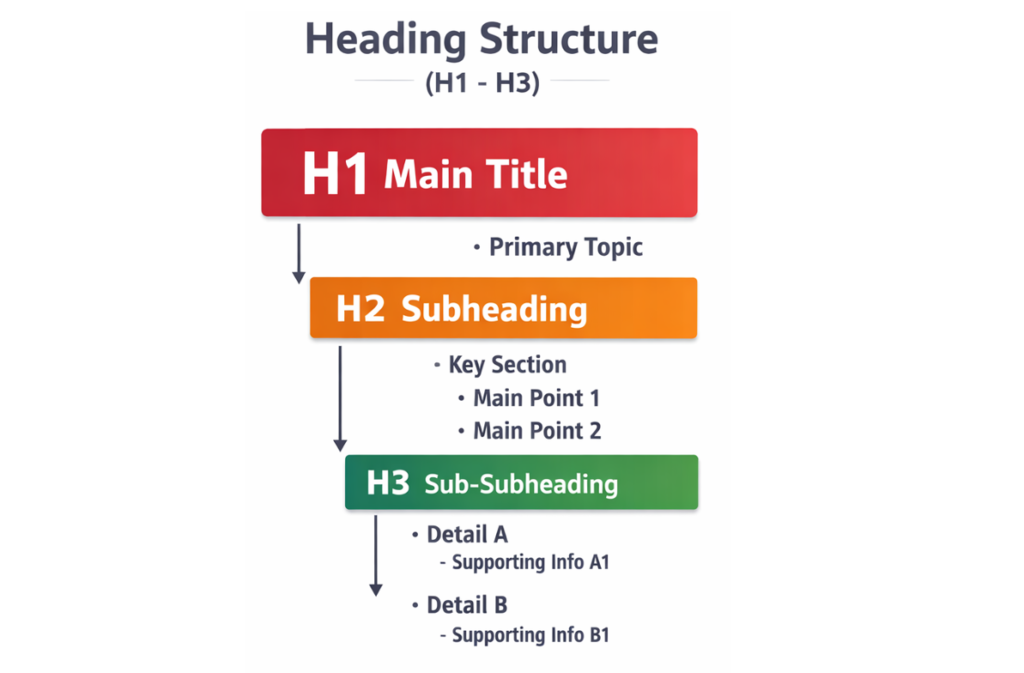
Organize your content clearly:
- H1 – Main title
- H2 – Main sections
- H3 – Supporting points
This improves both readability and SEO performance.
5. Optimize Your URL (Slug)
Keep your URL short and keyword-rich.
Good example:yourwebsite.com/on-page-seo-malaysia
Avoid:
- Long URLs
- Random numbers
- Unnecessary words
6. Use Internal Linking Strategically
Internal linking helps Google understand your site structure and keeps users engaged.
You can naturally link to:
- SEO best practices
- how SEO works
- SEO vs SEM
This improves crawlability and boosts ranking potential.
7. Optimize Images (Alt Text + Size)
Images improve user experience — but only if optimized.
Best practices:
- Compress images for faster loading
- Use descriptive filenames
- Add alt text
Example alt text:
on-page SEO checklist Malaysia guide
8. Improve Page Speed
A slow website can hurt rankings and increase bounce rate.
Ways to improve:
- Use fast hosting
- Compress CSS, JavaScript, and images
- Enable caching
9. Make Your Website Mobile-Friendly
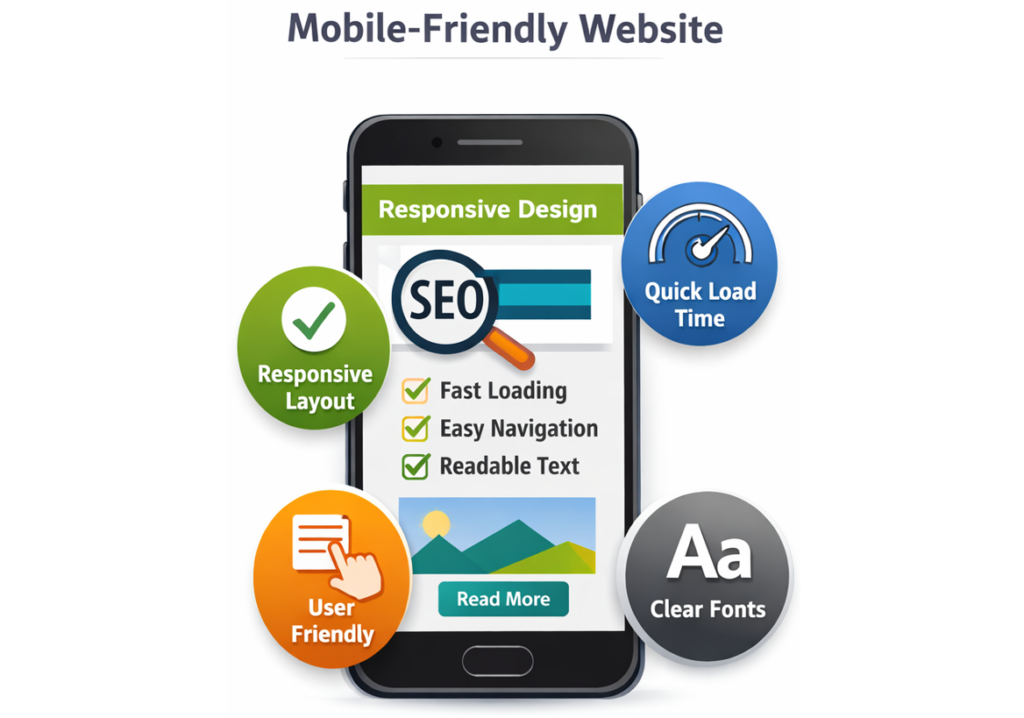
Most users in Malaysia browse on mobile devices.
Ensure:
- Responsive design
- Fast mobile loading speed
- Easy navigation
10. Create High-Quality Content
Content is still the most important ranking factor.
Focus on:
- Answering user intent clearly
- Writing in simple, easy-to-read language
- Avoiding keyword stuffing
Follow proven SEO best practices to improve your content quality.
Common On-Page SEO Mistakes to Avoid
Avoid these common issues:
- Keyword stuffing
- Duplicate content
- Missing meta tags
- Weak internal linking
- Slow loading pages
Fixing these alone can significantly improve your rankings.
On-Page SEO vs Off-Page SEO
- On-page SEO – optimization within your website
- Off-page SEO – backlinks and external signals
| Aspect | On-Page SEO | Off-Page SEO |
|---|---|---|
| Definition | Optimization done on your website | Optimization done outside your website |
| Main Goal | Improve page relevance & user experience | Build authority & trust |
| Key Focus | Content, structure, HTML elements | Backlinks, brand signals |
| Examples | Title tags, meta descriptions, headings, internal links, images | Backlinks, guest posts, social signals |
| Speed of Results | Faster (weeks) | Slower (months) |
| Risk Level | Low risk | Higher risk (bad backlinks can hurt rankings) |
| Tools Used | Google Search Console, on-page SEO tools | Ahrefs, backlink tools, outreach tools |
Both are important, but on-page SEO is where you should start.
On-Page SEO for Malaysian Businesses (Local Advantage)
If you’re targeting Malaysia, you have a unique advantage:
- Use both English + Bahasa Malaysia keywords
- Target local intent (e.g., “near me”, “KL”, “Selangor”)
- Create content relevant to Malaysian users
This helps you compete with lower difficulty keywords while still gaining traffic.
Frequently Asked Questions
How Long Does On-Page SEO Take to Work?
On-page SEO usually takes 2 to 6 weeks to show initial improvements. However, stronger ranking results typically appear within 2 to 3 months
Is on-page SEO enough to rank in Malaysia?
On-page SEO is essential, but combining it with off-page SEO like backlinks gives better results.
What is the most important on-page SEO factor?
High-quality content and proper keyword usage are the most important factors.
How do I start on-page SEO?
Start with keyword research, then optimize your title, content, headings, and user experience.
What is on-page SEO in simple terms?
On-page SEO means optimizing your website content and structure so search engines can understand and rank it better.