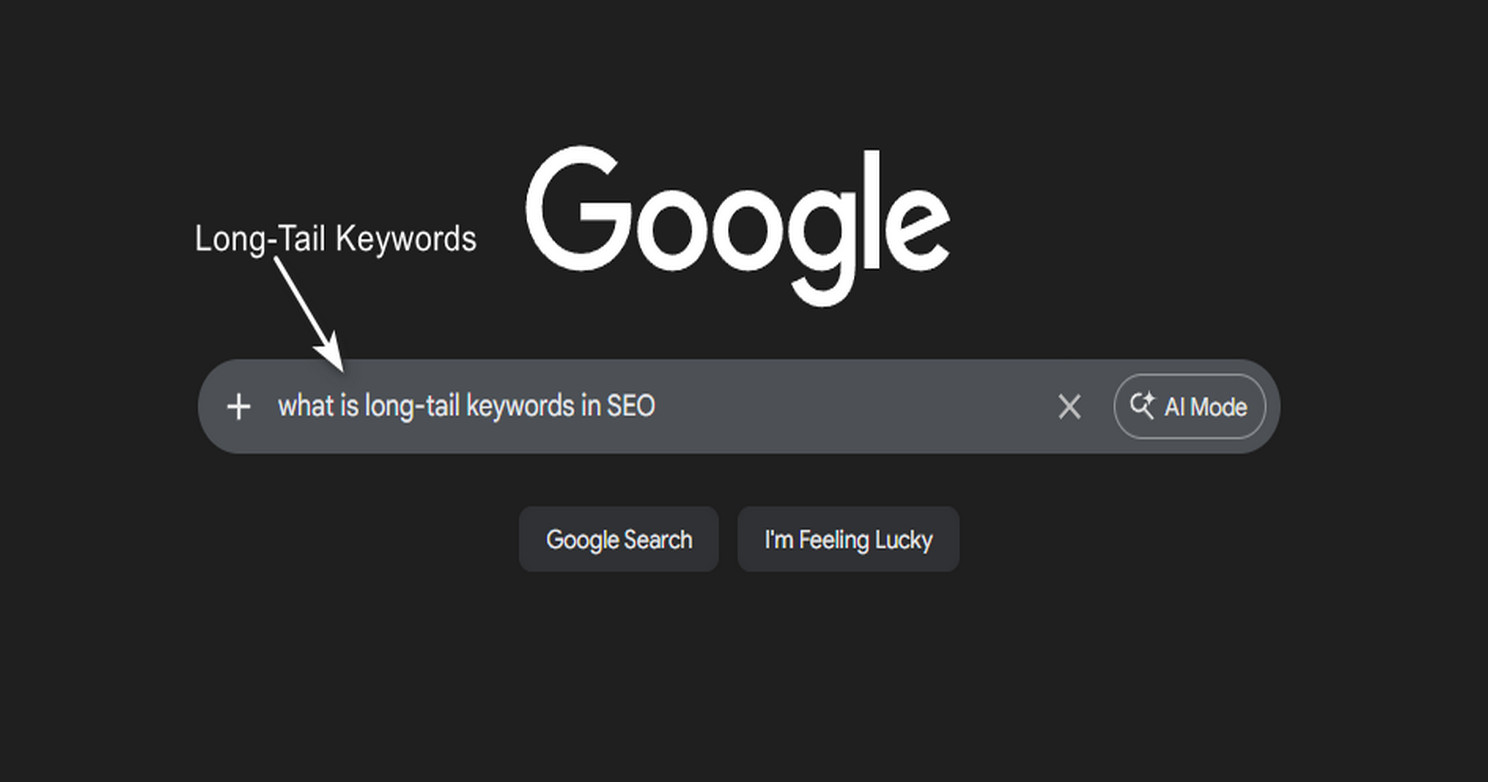
Definition:
A long-tail keyword is a detailed search phrase with three to five or more words. It has lower search volume and competition, and it targets a more specific user intent.
Long-tail keywords are phrases with lower search volume and competition. They typically consist of three to five words or more, making them more specific compared to short-tail keyword. This allows you to target a particular niche audience more effectively and increases the chances of ranking your website on search engines.
Examples:
- Long-tail keyword – What is keyword research in SEO
- Short-tail keyword – keyword research
Why Long-Tail Keywords are Important
1. Long-Tail Keywords is not competitive at all
When it comes to long-tail keywords, it is easier to rank compared to short-tail keyword as it has lower search volume and less competition. This makes it easier for new website to rank on search engines.
Example of short-tail keyword like “SEO ” has about close to 2 Billion in Google search results.

Now, imagine you will need to outrank all these numbers in order to be No. 1 in Google search results.
On the other hand, long-tail keyword like “how to start SEO in Malaysia for new website step by step has only over 22 Million.
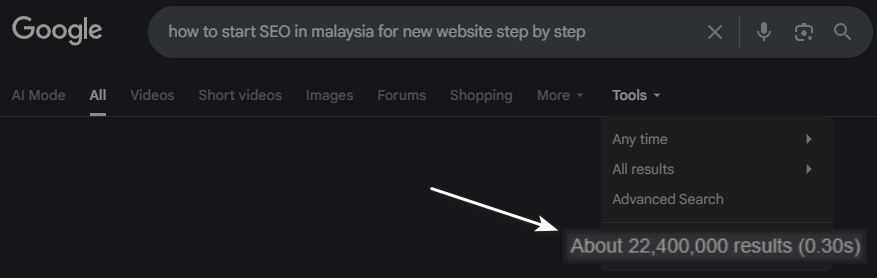
This shows that long-tail keyword has lower competition level than short-tail keyword.
This also applies in paid advertisement (PPC campaigns). A long-tail keyword is cheaper to bid compared to popular short-tail keywords.
2. Long-Tail Keyword have Higher Conversion Rates
Having long keywords with more than 3–5 words is not as bad as you might think. Long-tail keywords are very specific and closely match user search intent. They often have commercial or transactional intent.
Users who search for long-tail keywords usually already understand what they are looking for and are closer to the buying stage.
Examples of Long-Tail Keyword – Transactional Intent
- Cheap water bottle in Malaysia
- Spotify subscription price Malaysia
- buy MacBook Pro Malaysia
Example of Long-Tail Keyword – Commercial Intent
- best SEO tools for Beginners
- top full equipment gym in KL
- Ahrefs vs SEMrush which is better
With that said, the traffic generated from these long-tail keywords is more likely to convert into potential customers for businesses.
How to Find Long-Tail Keywords
There are few ways to analyze long-tail keywords for beginners:
1. Google Search Suggestions
Google search suggestions is automatically complete your keyword by suggesting additional words at the bottom of the search engine. These suggestions are based on real user searches.
Lets say you type out “what is SEO,” and Google might suggest:
- what is seo and sem
- what is seo in digital marketing
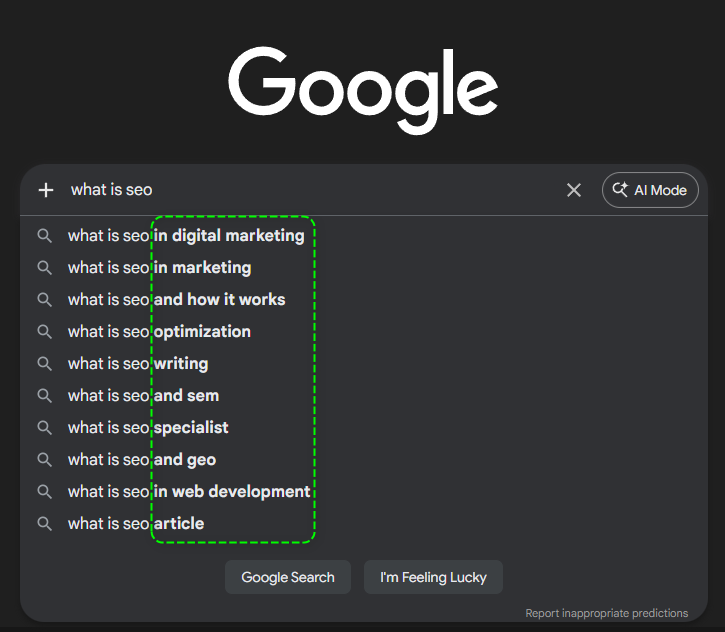
Don’t just stop there, you can also type additional letters, and Google will generate more suggestions based on them. Some suggestions may not be relevant to your topic, so choose the ones that are most appropriate.
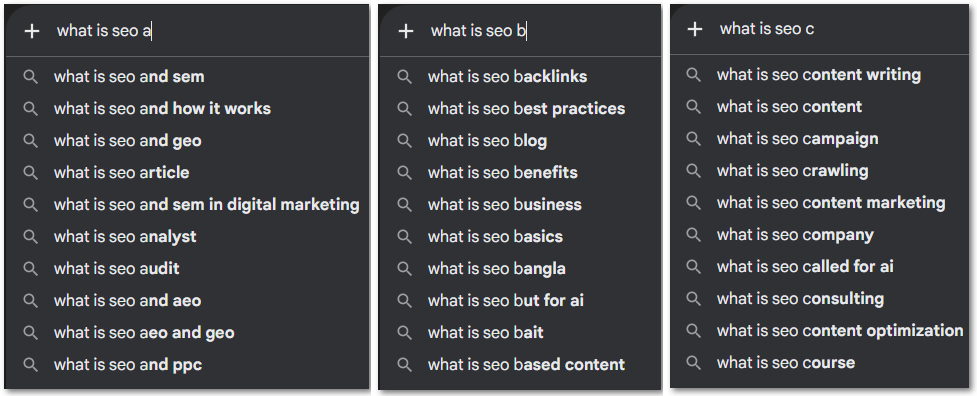
These auto-suggestions are perfect for beginners who are analyzing long-tail keywords because they reflect what users are actively searching for, making them highly valuable during the keyword research phase.
2. Check “People Also Ask”
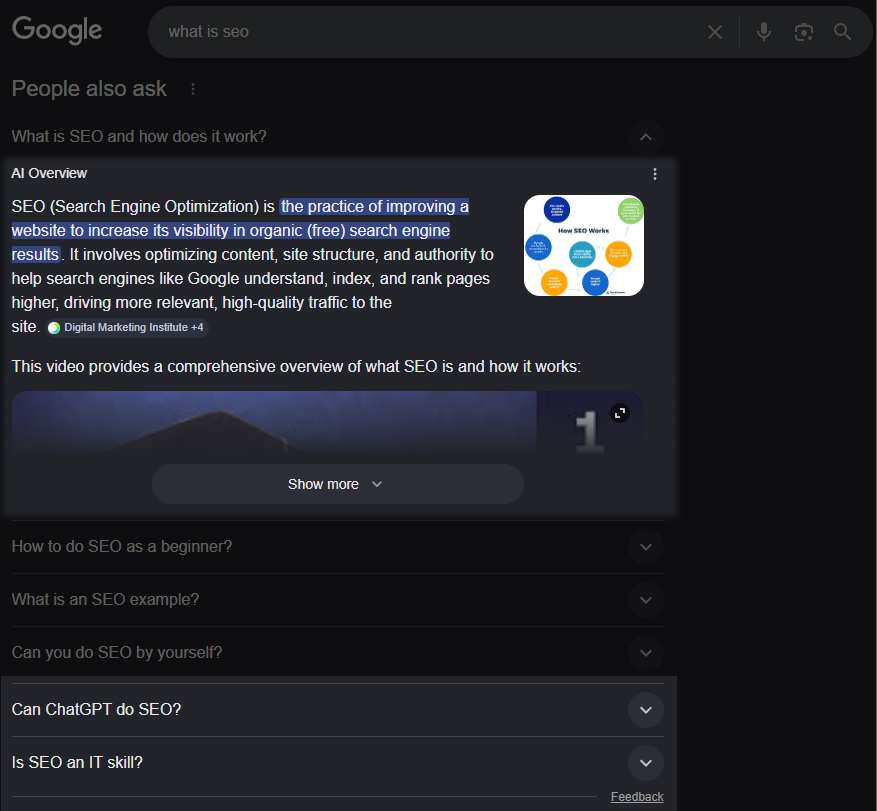
Google also provides a section called “People Also Ask,” which shows common questions related to your search query. This is another effective way to find long-tail keywords because it reveals user intent and the specific problems people want answers to.
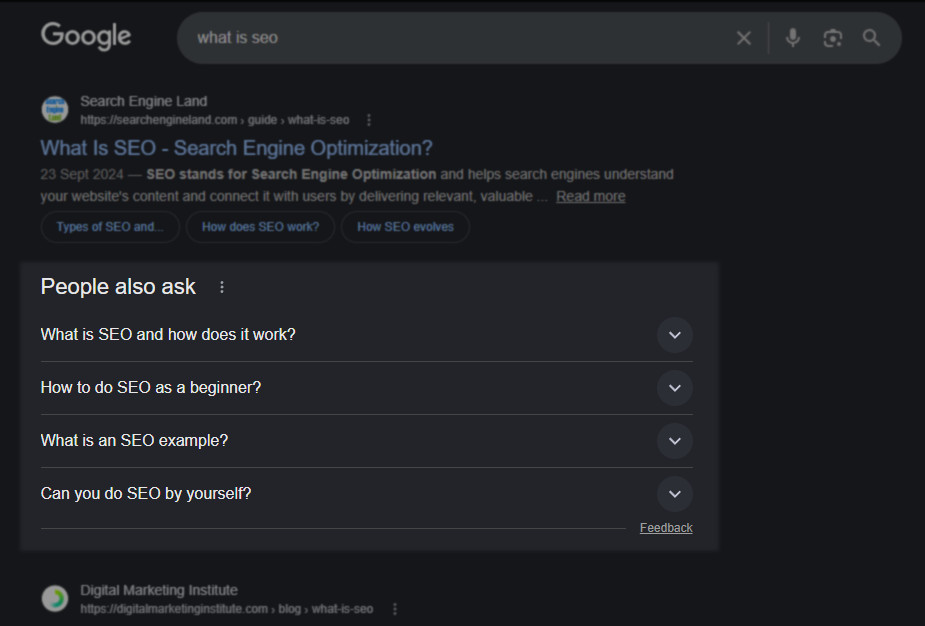
Besides that, you can view the answers by clicking on the questions, and Google will also display additional questions that people may ask, helping you discover more relevant keywords.
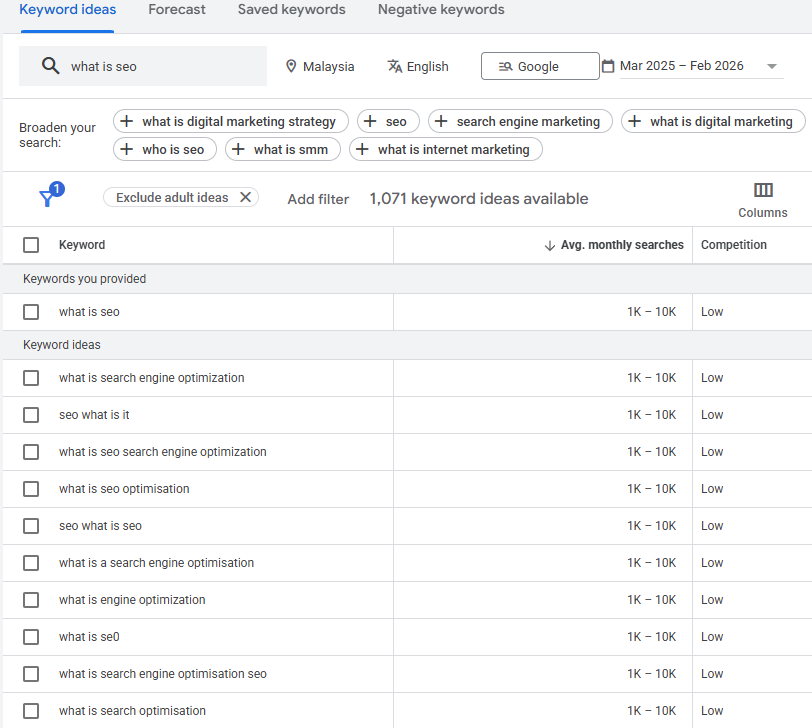
3. Keyword Research Tools
Keyword research tools can help reduce the time spent searching for keywords manually. They can also discover a wider range of useful data, such as search volume and competition level. Tools like Google Keyword Planner are a good starting point for beginners.
4. Look at Competitors
Search your niche keyword on Google and look at the top-ranking pages, these are your competitors.
Analyze their:
- Title and headings
- Keywords that they are targeting
- Type of content they create
By doing this, you can understand what type of content or format ranks well and use that insight to create better or more detailed content.
Where to insert your Long-Tail Keywords?
1. Add in Your Title and Headings
Include your main long-tail keyword in your title tag which is H1 and related keyword in H2 or H3 headings
2. Use it Naturally in Content
Mention your keywords naturally while explaining your content without overusing them. Avoid keyword stuffing.
3. Match Search Intent
Make sure your long-tail keywords and content answer the exact question or need behind the search. Do not go off-topic.
4. Optimize for SEO
Don’t forget to include your keywords in several places for better optimization.
- In meta title and description
- Internal Links
- Write clear and structured content
Frequently Asked Questions
When should I use long-tail keywords instead of short keywords?
Use long-tail keywords when you want to target specific intent and rank faster. They are ideal for niche topics, new websites, and users ready to take action, such as buying or signing up.
Are long-tail keywords still relevant in 2026?
Yes, long-tail keywords are still relevant in 2026 because search engines focus on user intent and natural language queries. They help match what users are actually searching for, especially in voice search.
Why do long-tail keywords convert better?
Long-tail keywords convert better because they target users with clear and specific intent. These users already know what they want, making them more likely to take action.
Do long-tail keywords bring more traffic or just better traffic?
Long-tail keywords bring better, more targeted traffic rather than high volume. They attract users who are more likely to engage or convert, leading to higher overall results.
Are long-tail keywords good for new websites?
Yes, long-tail keywords are great for new websites because they have lower competition and are easier to rank for, helping you gain visibility and targeted traffic faster.