Tag: seo

  • What is Keyword Research in SEO?

    What is Keyword Research in SEO?

    Definition:
    Keyword Research is a process of finding and analyzing specific words or phrases that user are looking for in search engines.

    If you’re new to SEO, you will be seeing the word keyword research a lot. You must be wondering what does it mean and why is it so important?

    Keyword Research helps you to understand what is your target audience is looking for on Google so that you are able to create content that matches their inquiries. When you ace your keyword research, it can increase your website visibility, attract organic traffic, and boost your search rankings on search result.

    What is Keyword Research?

    Keyword Research is a process doing research on finding and analyzing the words and phrases that you think people will look for in search engines like Google.

    Example of keywords that represent user intent:

    • “best camera shop in KL
    • “how to start SEO?”
    • “cheap running shoes in Malaysia”

    By targeting the right keyword, you can ensure that the content will appear on user’s screen when they search the topic related to your business or niche.

    Why is Keyword Research Important?

    Keyword Research one of the important part of SEO best practice because it allows to reach to the right audience and helps search engines to understand your content better.

    Drives Organic Traffic

    By ranking the right keywords, your website tend to attract more organic traffic (unpaid traffic) from search engines

    Understands User Intent

    You need to understand user intent before doing keyword research. Some users are looking for information, while others are ready to buy. Keyword research helps you target the right audience at the right stage.

    Improves Content Strategy

    Instead of wondering what blog to write, studying and planning your keyword research gives you a clear direction on what topics to create, based on what your audience actually cares about.

    Types of Keywords Beginners Should Know
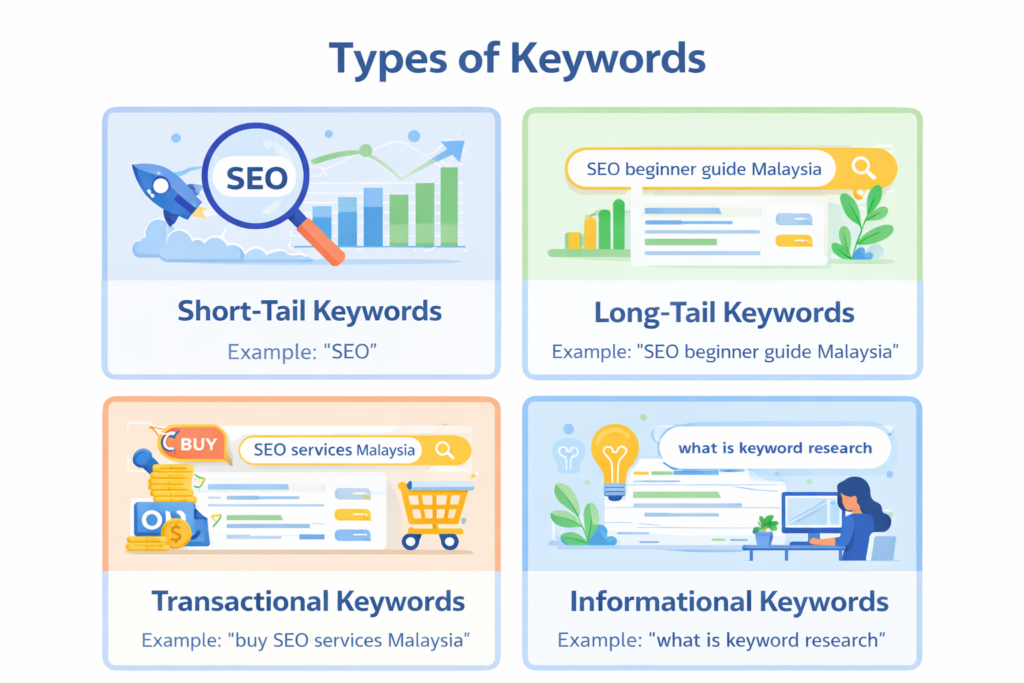
    comparison of 4 types of keywords

    Short-Tail Keywords

    • Example: “SEO”
    • High search volume, very competitive

    Long-Tail Keywords

    • Example: SEO Beginner Guide Malaysia
    • Low competition and easier to rank

    Transactional Keywords

    • Example: buy SEO services in Malaysia
    • High conversion potential

    Informational Keywords

    • Example: What is SEO?
    • Good for blog content and traffic

    How to start Keyword Research? (Step-by-Step)
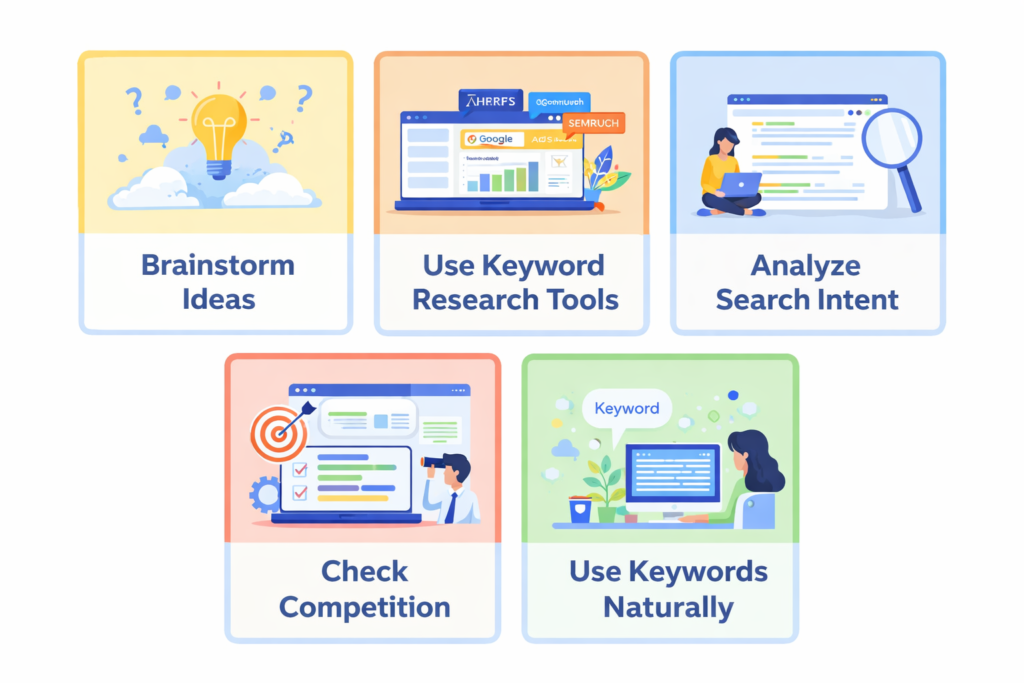
    keyword research in 5 steps

    Step 1: Brainstorm your ideas

    Start doing research on what niche you want to go for. Who is your audience? What would they search for?

    Example:

    • Best SEO Practices
    • keyword research free tools
    • SEO free tools
    • Beginner SEO guide

    Step 2: Use Keyword Research Tools

    There are lots of keyword research tools around on internet. Here are example that you may use to start finding your your keywords:

    • Google Keyword Planner
    • Ubersuggest
    • Ahrefs
    • SEMrush

    With these tools, you will be able to look for keyword data such as search volume, difficulty, and related keywords. This provided information can help you to understand what are the keyword that people are searching for and how competitive is it to rank.

    Step 3: Analyze Search Intent

    Search up your selected keyword on Google and look at the results to understand the search intent behind it:

    Example:

    • What kind of blog post is this?
    • Product pages?
    • Guides?

    Try to match your content with what has already ranked on Google so it aligns with user search intent and performs better in search results.

    Step 4: Check Competition

    If you are creating a new content, avoid highly competitive keywords as it is hard to rank. Focus on long-tail keywords with lower difficulty. This has higher chance to rank your content better.

    Example:

    • “What is SEO in Malaysia?”
    • “The importance of using SEO and SEM in an IT company”

    Step 5: Use Keyword Naturally in Your Content

    Once you’ve decided on a keyword, include it clearly on your site so that search engines can better comprehend and rank your content. This helps to increase your visibility while keeping your contents relevant and easy to read.

    Example:

    • Title (H1)
    • Headings (H2, H3)
    • Meta Description
    • URL
    • Image alt text

    Best Practices for Keyword Research

    Few things to keep in mind when it comes to best practices for keyword research:

    • Focus on one main keyword per page.
    • Use related keyword (LSI keyword)
    • Ensures that you write for human, not just search engines.
    • Content must be relevant and helpful
    • Continues to update your keywords regularly

  • What is SEO? A Beginner’s Guide to How SEO Works

    What is SEO? A Beginner’s Guide to How SEO Works

    Definition:
    SEO is a process of improving a website so it can rank higher in search engine results.

    What is SEO Exactly for Beginners?

    It is stands for Search Engine Optimization. SEO allows to rank websites higher. When someone searches on Google, the search engine shows the most relevant pages.

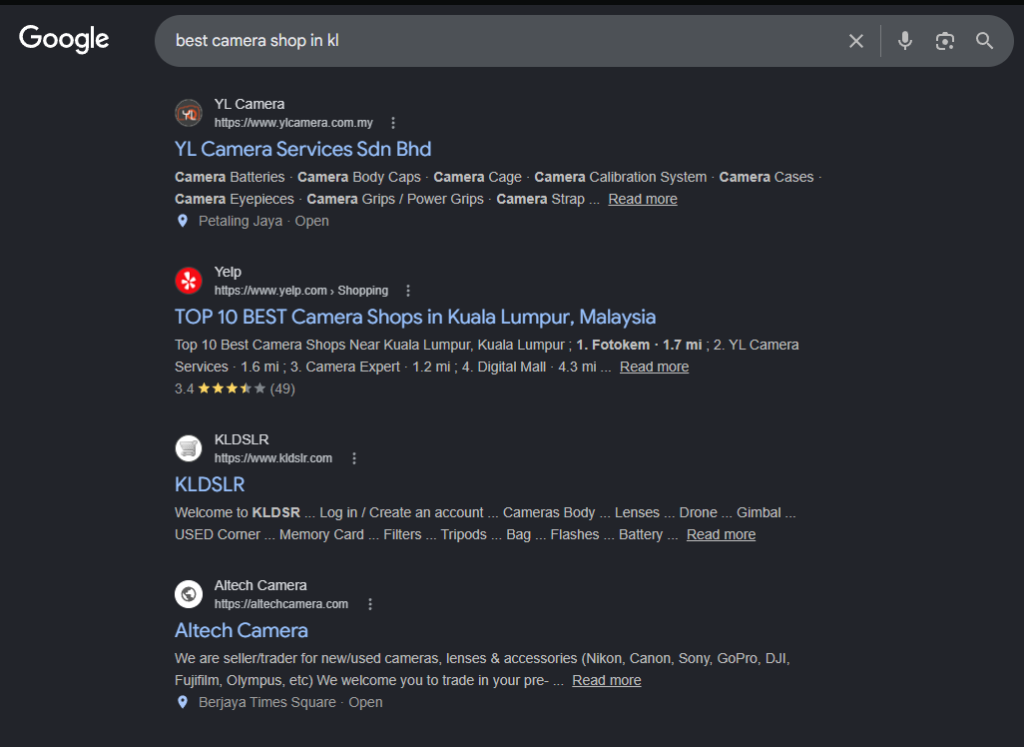
    For example, if someone searches for “best camera shop in kl”, search engines will show websites that are relevant to that search. Businesses that have optimized their websites using SEO are more likely to appear in these results.

    Camera shop that optimized their website using SEO is showing on top of the google search engine

    Why is SEO important?

    SEO is important because it helps your website become more visible on search engines like Google Search. When your pages rank higher in search results, more users can discover your content, leading to consistent organic traffic without relying on paid ads.

    In addition, SEO helps build trust and credibility. Websites that appear at the top of search results are often seen as more reliable, which can improve user confidence and engagement. Unlike paid advertising, SEO also provides long-term results, making it a cost-effective strategy for sustainable growth. Understanding the importance of SEO can help businesses focus on strategies that drive long-term success online.

    SEO vs SEM (Organic Traffic vs Paid Advertising)

    Speaking of SEO being able to generate organic traffic, according to semrush there is also SEM, which includes both SEO and paid search advertising. To understand the key differences, check out our post on SEO vs SEM: Key Differences Beginners Should Know for more details.

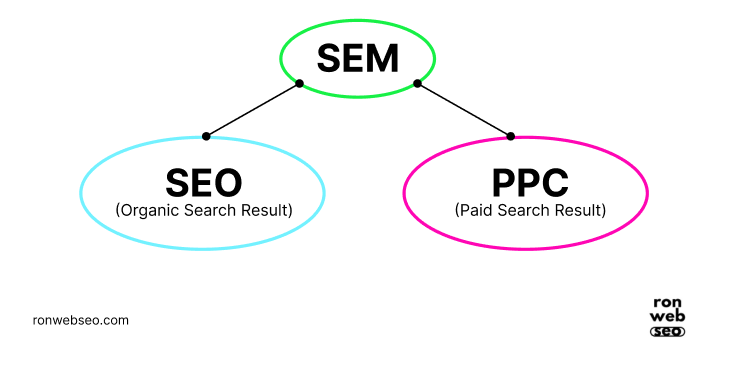
    Search Engine Marketing (SEM) is a digital marketing strategy that promotes businesses on search engines through both unpaid and paid methods.

    SEO and PPC are subsets of a SEM:

    Diagram showing that SEO and PPC is a subset of SEM
    • SEO – Focuses on generating organic traffic to improve your website’s ranking on search engine without paying for ads
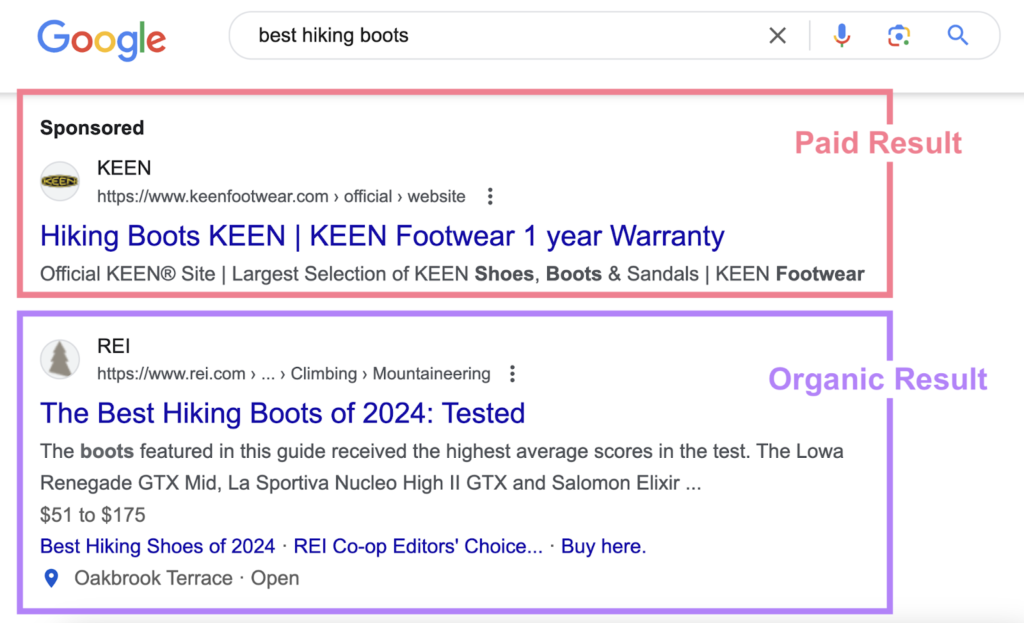
    • Pay-Per-Click (PPC) – Focuses on paid advertising by setting up ad campaigns to generate traffic to your website. These ads are usually appeared as “Sponsored”

    Paid ads can be seen in search engine with the label “Sponsored” or “Ad” as shown below

    Source: semrush

    How Do Search Engine Work?

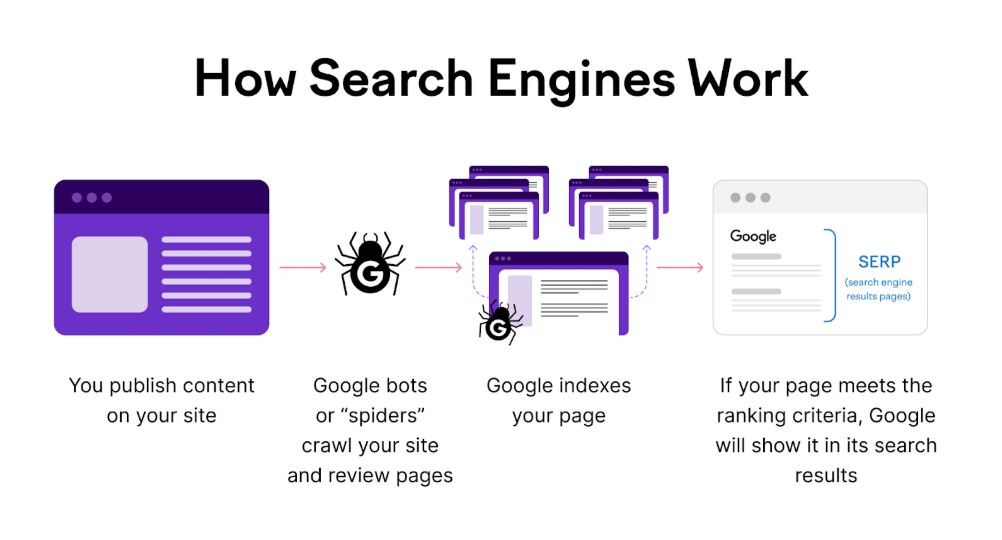
    Search Engine have 3 primary functions: Crawl, Index, and Rank. These functions work together to help satisfy users’ queries by delivering the results they are expecting.

    • Crawl – Search engines use web crawler “spiders” or “bots” to crawl and explore your website to discover new or updated pages. They follow hyperlinks, also known as internal links, to find additional pages.
    • Index – After discovering pages, search engines store, organize, and categorize your content in their database.
    • Rank – When a user enters a query, the search engine determines which pages are most relevant to that query and displays them in order.
    Source: semrush

    In a simple real-life analogy, Crawl is like a librarian exploring the library to find new books. Index is where they organizing the books in a catalog for easy reference. Finally, Rank is where they recommending the most relevant books when someone asks

    What are the Basic Steps in the SEO Process?

    Keyword Research

    First, start with Keyword Research which is one of the SEO best practices. Begin by identifying niche keywords related to your blog, website, or business and what your target audience is likely to search for. Explore what keywords your competitors are using as well. Once you have a list, use SEO tools to check each keyword’s search volume and ranking difficulty. This will show you approximately how many people search for that keyword each month and help you choose the best opportunities to target.

    Free SEO Tools that you can start with:

    • Google Keyword Planner
    • Ubersuggest
    • Google Trends

    Paid SEO Tools:

    • Ahrefs
    • SEMRush
    • Moz Pro

    On-Page Optimization

    On-page optimization is the process of optimizing elements within your website. It focuses on how and where you place your keywords effectively in your content. Keywords are important for on-page SEO because they help search engines and users understand how relevant your content is.

    Adding your keyword to your body content and the following location is when it is natural to do so is best practice:

    • Title tag: The HTML page title that can appear in Search Engine Result Page (SERPs)
    • Meta description: Is the HTML page summary that can appear in SERPs
    • H1 tag: The HTML element holds the main title of the page and also main keyword
    • Subheading tags: HTML tags that contain subheadings below H1 tag (H2, H3, etc.)
    • Alt text: HTML image descriptions
    • URL slug: The unique part of the webpage address

    Off-Page Optimization

    The main focus of off-page optimization is to make your website more trustworthy and authoritative to both users and search engines. This is where backlinks come in. Backlinks are links from other sites that point to yours. They are like a shout-out from another page or a recommendation from a trusted friend. Therefore, the more high-quality backlinks you have, the more credible and authoritative your site becomes.

    Few examples of Off-Page Optimization Task:

    • Building Backlinks – Reaching out to other author of the website to include links that points back to your site.
    • Guest Posting – Writing an article for other website and include link back to your related website.
    • Social Media Promotion – Sharing out your content on social media platform like LinkedIn, Instagram, Facebook, etc.
    • Influencer Outreach – Collaborating with influencer to mention or link your website.

    Technical SEO

    It ensures that your website loads quickly, is easy for search engines to crawl and index, and is mobile-friendly and secure. It improves your website performance, search rankings, and overall user experience.

    • Using meta robots tags and robot.txt is telling the search engine which page can be access
    • Creating and submitting an XML sitemap is to allow search engines to discover all your pages easily
    • Building internal links is to connect related pages and help both users and search engines navigate your site

    By implementing these technical optimizations, you create a smooth and enjoyable experience for users visiting your website, which can increase engagement, reduce bounce rates, and encourage visitors to stay longer.

    Example of SEO in Real Life

    To better understand SEO, consider a simple example.

    When a user searches for “best running shoes in Malaysia” on Google Search, search engines analyze and rank pages based on their relevance and quality. Websites that have strong on-page optimization, relevant keywords, and useful content are more likely to appear at the top.

    For example, a blog that provides detailed reviews, comparisons, and answers user questions will perform better than a page with little or no optimization. This shows how applying the right SEO strategies can directly impact your visibility in search results.

    How Long Does SEO Take to Work

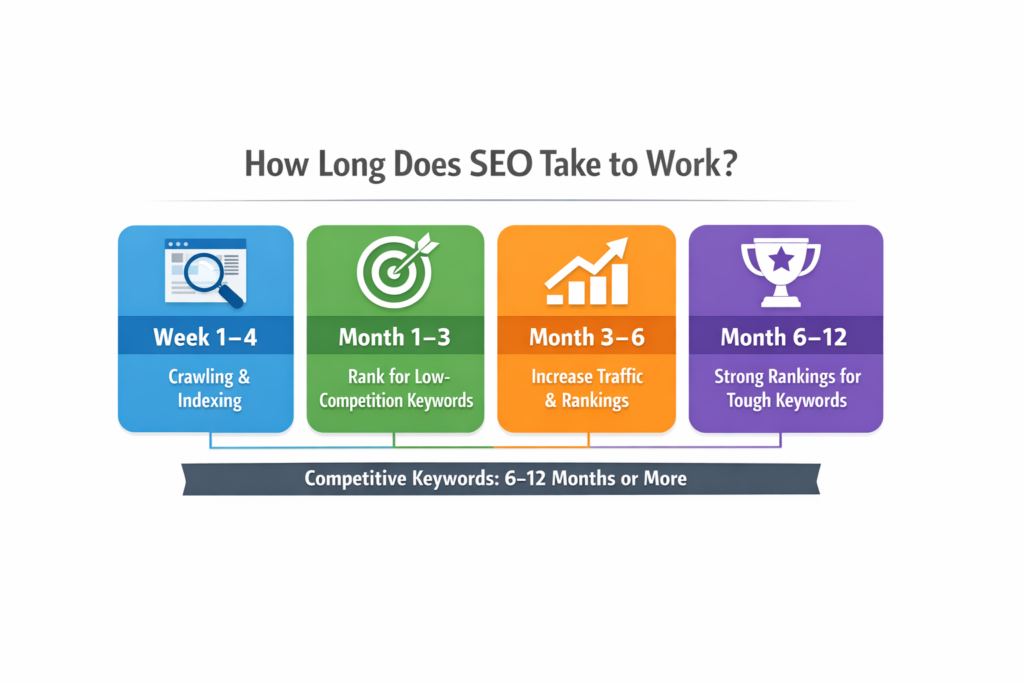
    SEO is a long-term strategy, and results typically take 3 to 6 months for most beginners to start seeing noticeable improvements. However, the exact timeline depends on your competition, website authority, and content quality.

    Timeline infographic explaining how long SEO takes to work, starting from week 1 to 4 for crawling and indexing, followed by month 1 to 3 for early keyword rankings, month 3 to 6 for traffic growth, and month 6 to 12 for competitive keyword rankings.

    In the first 2 to 4 weeks, search engines may begin crawling and indexing your pages, but you usually won’t see significant ranking changes yet.

    Between 1 to 3 months, your content may start ranking for low-competition keywords, especially if your website is properly optimized and you follow SEO best practices.

    By around 3 to 6 months, you should begin seeing more consistent traffic growth and better rankings, particularly if you continue producing high-quality content and building authority.

    For highly competitive keywords, it can take 6 to 12 months or more to achieve top rankings.