What is Pay Per Click (PPC)?
Pay-per-click (PPC) is a digital advertising model where advertisers pay a fee each time someone clicks on their ad. In Malaysia, many businesses use PPC to quickly appear on Google search results and attract local customers. Businesses use paid ads to appear at the top of search results instead of relying on organic traffic.
It is a key part of search engine marketing (SEM) and works alongside SEO strategies for organic traffic, which focuses on long-term rankings.
How Does Pay Per Click Work?
PPC works like an auction where businesses bid to show their ads on search engines like Google, commonly through Google Ads in Malaysia.
- Advertisers choose keywords using effective keyword research techniques
- They set bids based on competition
- Ads are displayed when users search those keywords
- You only pay when someone clicks
This is why understanding how to do keyword research properly is essential before running campaigns.
Which Keywords Are Better for PPC: Long-Tail or Short-Tail?
When running PPC campaigns, choosing the right type of keyword is important for both cost and performance. There are two main types: long-tail and short-tail keywords.
- Long-tail keywords are more specific (example, “best trainer shoes suit for long run and gym Malaysia”). They usually have lower competition, lower cost-per-click, and higher conversion rates because users have clear intent.
- Short-tail keywords are broad terms (example, “running shoes”). These keywords have higher search volume but are more competitive and expensive, making them harder for beginners to use effectively.
For beginners, long-tail keywords are usually the better choice as they are more affordable and targeted.
Why is PPC Important?
PPC helps businesses gain visibility quickly while maintaining control over performance and budget.
- Instant visibility
Ads can appear at the top of search results within hours, making PPC ideal for new websites. - Targeted reach
You can reach users based on search intent, location, and behavior. - Measurable results
Track clicks, conversions, and return on investment easily. - Budget control
You decide how much to spend and can scale anytime.
To maximize performance, PPC works best when combined with on-page SEO optimization techniques.
PPC vs SEO: What’s the Difference?
| PPC | SEO |
|---|---|
| Paid traffic | Organic traffic |
| Immediate visibility | Takes time to rank |
| Stops when budget ends | Long-term growth |
Understanding the difference between SEO and SEM helps you choose the right strategy.
Which Is Better for Businesses in Malaysia: SEO or PPC?
For businesses in Malaysia, the best approach depends on your goals.
- Choose PPC for fast results
Ideal for promotions, new launches, or generating leads quickly. - Choose SEO for long-term growth
Builds consistent traffic without ongoing ad costs. - Best approach: combine both
Many businesses start with PPC, then scale with long-term SEO strategies.
For example, you can use PPC to test keywords, then focus on SEO best practices for ranking those keywords organically.
5 Types of PPC Advertisements
1. Search Ads
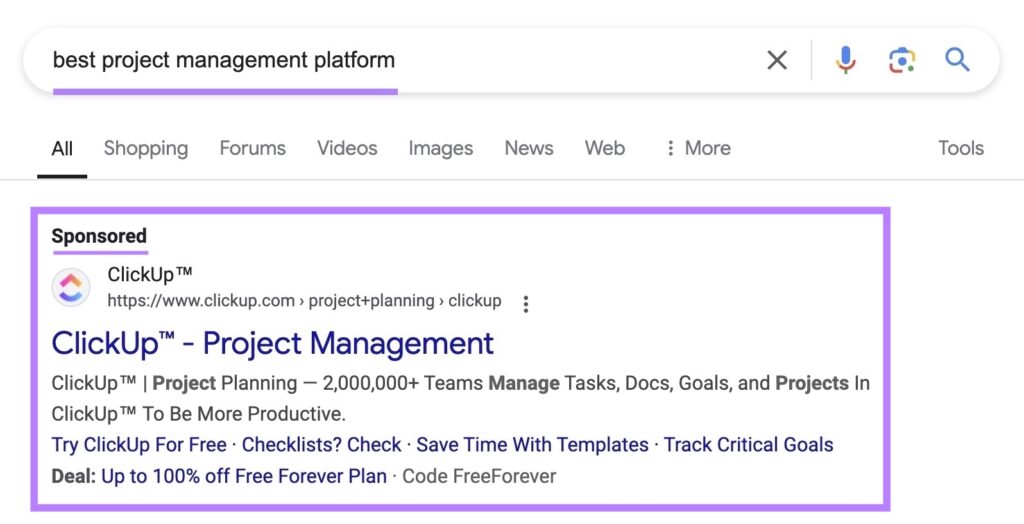
Usually the label “Ad” or “Sponsored” appear on search engine results pages. It is the best for capturing users with strong buying intent.
For example, when a user search “best project management platform”, the result will appeared as such:
2. Display Ads
A poster banner ads shown across websites. It is useful for brand awareness.
For example, When users scroll through the webpage, it appears in front of the screen and overlays the page content.

3. Shopping Ads
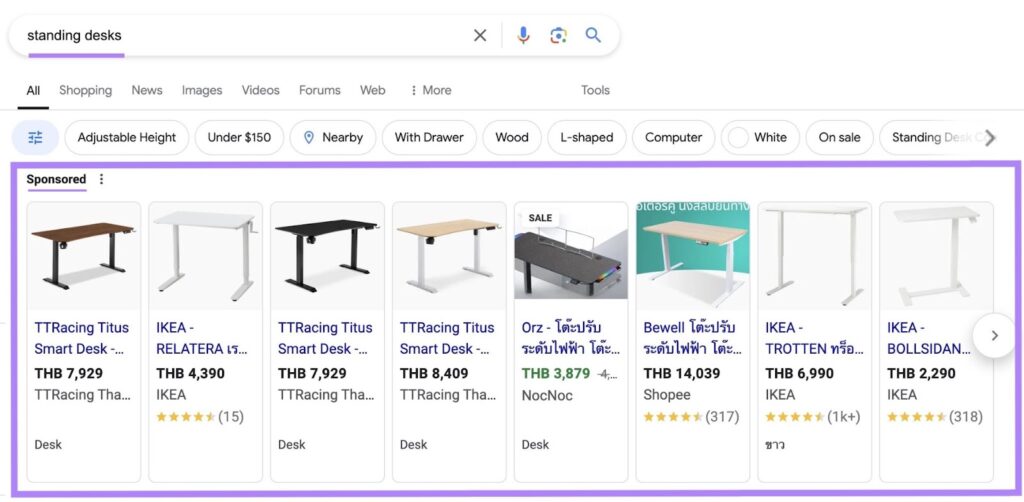
Product listings that show price, image, and store name. Perfect for those are running businesses in e-commerce.
For example, when a user searches for “standing desk” on a search engine, it displays a list of relevant products from different online shops at the top of the search results (SERPs).
4. Video Ads
Ads displayed on platforms like YouTube. Effective for engagement and storytelling.
For example, when a user watches videos on YouTube, a video ad can appear before or during the video, promoting a product or service to attract their attention and encourage them to learn more.

5. Remarketing Ads
Ads targeting users who previously visited your site. It helps to increase chances in conversion rates for businesses.
For example, when a user has previously searched for and visited the “Idyll Tote Bag,” they may be retargeted with ads for the same tote bag on social media.

How to Start a PPC Campaign (Step-by-Step)?
Launching a PPC campaign is straightforward if you follow a structured approach.
Step 1: Choose Your Keywords
Start with keyword research and select relevant keywords based on your target audience. For beginners, using long-tail keywords is recommended as they are more specific and cost-effective.
Step 2: Create Your Ad
Write a clear and engaging ad with a strong headline, description, and call-to-action (CTA) to attract users.
Step 3: Set Your Budget
Decide how much you want to spend daily or monthly. In Malaysia, many businesses start with a small budget such as RM20–RM50 per day.
Step 4: Target Your Audience
Choose your audience based on location, such as targeting users in Malaysia, age, or interests to reach the right people.
Step 5: Launch Your Campaign
Publish your campaign through platforms like Google Ads and start running your ads.
Step 6: Monitor and Optimize
Track your ad performance and make improvements by adjusting keywords, bids, and ad copy to get better results.