
Definition:
Keyword Research is a process of finding and analyzing specific words or phrases that user are looking for in search engines.
If you’re new to SEO, you will be seeing the word keyword research a lot. You must be wondering what does it mean and why is it so important?
Keyword Research helps you to understand what is your target audience is looking for on Google so that you are able to create content that matches their inquiries. When you ace your keyword research, it can increase your website visibility, attract organic traffic, and boost your search rankings on search result.
What is Keyword Research?
Keyword Research is a process doing research on finding and analyzing the words and phrases that you think people will look for in search engines like Google.
Example of keywords that represent user intent:
- “best camera shop in KL
- “how to start SEO?”
- “cheap running shoes in Malaysia”
By targeting the right keyword, you can ensure that the content will appear on user’s screen when they search the topic related to your business or niche.
Why is Keyword Research Important?
Keyword Research one of the important part of SEO best practice because it allows to reach to the right audience and helps search engines to understand your content better.
Drives Organic Traffic
By ranking the right keywords, your website tend to attract more organic traffic (unpaid traffic) from search engines
Understands User Intent
You need to understand user intent before doing keyword research. Some users are looking for information, while others are ready to buy. Keyword research helps you target the right audience at the right stage.
Improves Content Strategy
Instead of wondering what blog to write, studying and planning your keyword research gives you a clear direction on what topics to create, based on what your audience actually cares about.
Types of Keywords Beginners Should Know
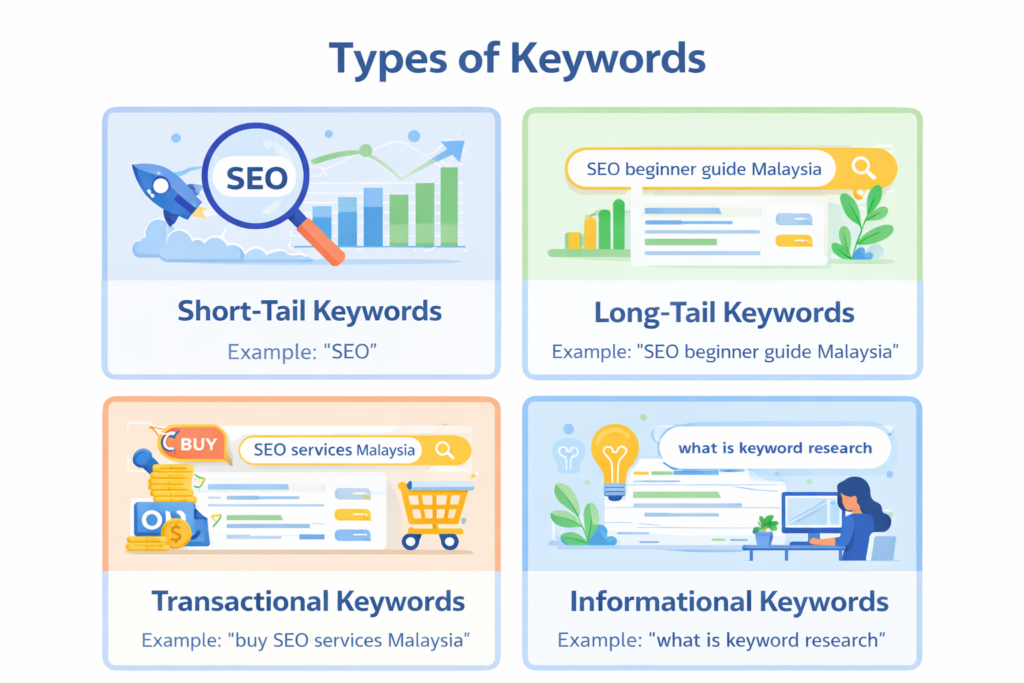
Short-Tail Keywords
- Example: “SEO”
- High search volume, very competitive
Long-Tail Keywords
- Example: SEO Beginner Guide Malaysia
- Low competition and easier to rank
Transactional Keywords
- Example: buy SEO services in Malaysia
- High conversion potential
Informational Keywords
- Example: What is SEO?
- Good for blog content and traffic
How to start Keyword Research? (Step-by-Step)
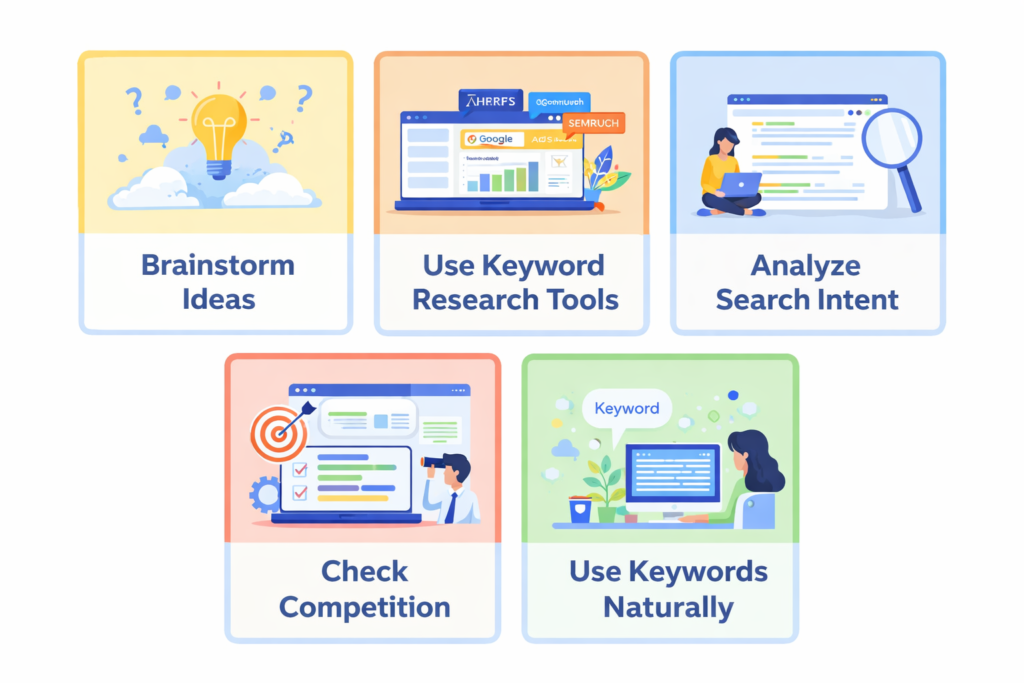
Step 1: Brainstorm your ideas
Start doing research on what niche you want to go for. Who is your audience? What would they search for?
Example:
- Best SEO Practices
- keyword research free tools
- SEO free tools
- Beginner SEO guide
Step 2: Use Keyword Research Tools
There are lots of keyword research tools around on internet. Here are example that you may use to start finding your your keywords:
- Google Keyword Planner
- Ubersuggest
- Ahrefs
- SEMrush
With these tools, you will be able to look for keyword data such as search volume, difficulty, and related keywords. This provided information can help you to understand what are the keyword that people are searching for and how competitive is it to rank.
Step 3: Analyze Search Intent
Search up your selected keyword on Google and look at the results to understand the search intent behind it:
Example:
- What kind of blog post is this?
- Product pages?
- Guides?
Try to match your content with what has already ranked on Google so it aligns with user search intent and performs better in search results.
Step 4: Check Competition
If you are creating a new content, avoid highly competitive keywords as it is hard to rank. Focus on long-tail keywords with lower difficulty. This has higher chance to rank your content better.
Example:
- “What is SEO in Malaysia?”
- “The importance of using SEO and SEM in an IT company”
Step 5: Use Keyword Naturally in Your Content
Once you’ve decided on a keyword, include it clearly on your site so that search engines can better comprehend and rank your content. This helps to increase your visibility while keeping your contents relevant and easy to read.
Example:
- Title (H1)
- Headings (H2, H3)
- Meta Description
- URL
- Image alt text
Best Practices for Keyword Research
Few things to keep in mind when it comes to best practices for keyword research:
- Focus on one main keyword per page.
- Use related keyword (LSI keyword)
- Ensures that you write for human, not just search engines.
- Content must be relevant and helpful
- Continues to update your keywords regularly