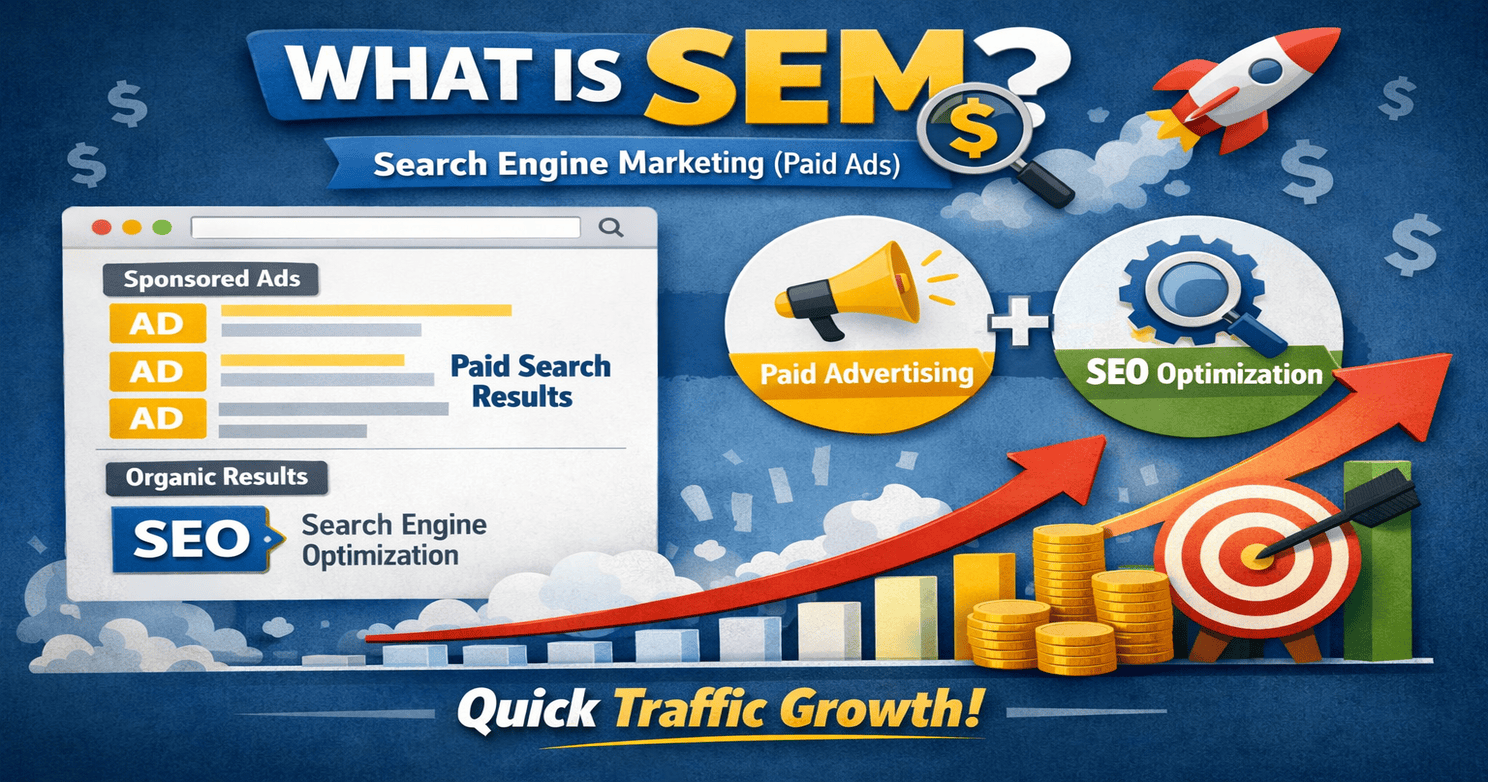
Definition:
SEM is a digital marketing strategy that uses paid search ads to increase a website’s visibility on search engines like Google, helping businesses attract targeted traffic and generate conversions quickly.
What Is SEM? (Search Engine Marketing)
Search Engine Marketing (SEM) is a digital marketing strategy that promotes a website through paid search ads on search engines like Google. It helps your website appear at the top of search results when users search for specific keywords with “Sponsored” label.
In simple terms, SEM is the process of using paid advertising (PPC – Pay-Per-Click) to gain instant visibility and attract targeted traffic. Unlike search engine optimization (SEO), it attract organic traffic only. SEM delivers immediate results by placing your ads in front of users actively searching for your product or service.
Related Blog: SEO vs SEM: Key Differences Beginners Should Know
How SEM Works
SEM works through a bidding system where advertisers compete for keywords:
- Choose relevant keywords (keyword research is important)
- Create ad campaigns using platforms like Google Ads
- Set a budget and bid for clicks
- Write compelling ad copy
- Drive users to a landing page designed for conversions
Search engines use factors like bid amount and Quality Score to decide which ads appear and in what position.
What Is Included in SEM?
SEM includes several key elements that work together:
- Paid search ads – Ads that appear on search engine results pages (SERPs)
- PPC (Pay-Per-Click) – You only pay when users click your ad
- Keyword targeting – Choosing the right search terms
- Ad copy optimization – Writing clear and relevant ad messages
- Landing page optimization – Improving page experience to increase conversions
How Fast Can SEM Work?
Search Engine Marketing (SEM) can deliver results very quickly because it uses paid ads on platforms like Google. You can start seeing results within hours to 1 day after your ads go live.
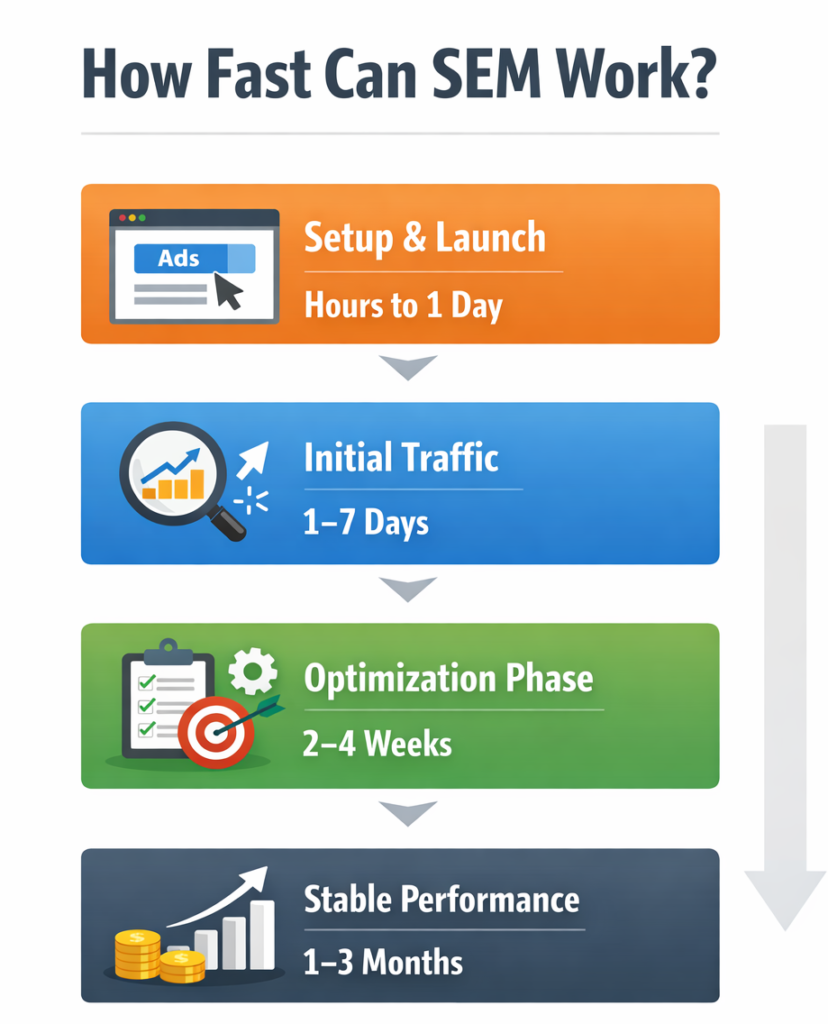
- Once your campaign is approved, your ads begin appearing on search results almost immediately, bringing in clicks and traffic. In the first 1–7 days, you will begin to collect performance data such as impressions, clicks, and conversions.
- This data helps you understand which keywords and ads are performing well. During the 2–4 week period, you should optimize your campaign.
- You can improve performance by adjusting keywords, refining ad copy, and optimizing your bidding strategy. After 1–3 months, your SEM campaign can achieve stable and consistent results.
- With continuous optimization, your ads will generate steady traffic and better return on investment (ROI).
What Happens if SEM Expires?
When you stop paying for SEM, your ads will stop showing immediately on search engines.
As a result, your traffic will drop quickly because SEM only works while you are paying. This makes SEM a good option for short-term traffic, but not for long-term growth.
This is why SEM is often used as a short-term strategy to:
- Boost traffic quickly
- Promote time-sensitive campaigns
- Increase visibility for new products or pages
Once the campaign ends, the traffic disappears, which is why SEM should not be relied on as your only source of traffic.
Can both SEM and SEO Work Together?
Yes, absolutely. SEM and SEO can work together as a powerful digital marketing strategy when used correctly.
Logically, SEM helps you get immediate visibility through paid ads, while SEO builds long-term organic rankings over time. By combining both, you can maximize your presence on search engines
Here’s how they complement each other:
- SEM drives quick traffic and helps you test keywords, ads, and conversions
- SEO builds sustainable traffic and improves long-term credibility
- Together, they increase your chances of appearing on both paid and organic results
Using both strategies allows you to:
- Capture users at different stages of the buying journey
- Increase brand exposure
- Improve overall click-through rate (CTR)
- Gather data from SEM to improve your SEO strategy
In short, SEM gives you fast results, while SEO ensures long-term growth. Combining both creates a more complete and effective search strategy.
Why SEM Matters
SEM is important because it helps businesses grow faster and more efficiently.
1. Instant Visibility
SEM allows your website to appear at the top of search results almost immediately.
2. Highly Targeted Traffic
You can target users based on keywords, location, and intent, ensuring your ads reach the right audience.
3. Measurable Results
With tools like Google Analytics, you can track clicks, impressions, and conversions easily.
4. Supports SEO Strategy
SEM complements on-page SEO and off-page SEO by helping you test keywords and understand user behavior.
SEM vs SEO (Quick Explanation)
- SEM (Search Engine Marketing) – Paid ads for fast traffic
- SEO (Search Engine Optimization) – Organic traffic for long-term growth
Both strategies work best together in a complete digital marketing strategy.
When to Use SEM
SEM is best when you want:
- Fast results and immediate traffic
- To promote a new product or service
- To test keywords or market demand
- To increase conversions quickly
Frequently Asked Questions
How does SEM help businesses grow?
It drives immediate traffic and leads.
Is SEM suitable for small businesses?
Yes, especially for quick results and promotions.
What platforms are used for SEM?
Google Ads is the most common platform.