SEO vs SEM, what are they? SEO (Search Engine Optimization) and SEM (Search Engine Marketing) are both strategies to help websites appear in search engines, but they work in different ways. Therefore, it is important to understand the differences between SEO and SEM because it helps businesses to decide which strategies to use to gain more visitors.
What is SEO?
SEO (Search Engine Optimization) is the process of improving a website so that it can rank higher on search engines. It focuses on generating organic traffic, which means people find your website naturally through search results instead of paid advertisements.
What is SEM?
SEM (Search Engine Marketing) is a process of business uses running paid ads to increase their website’s visibility and rank on top of the SERPs (Search Engine Result Page).
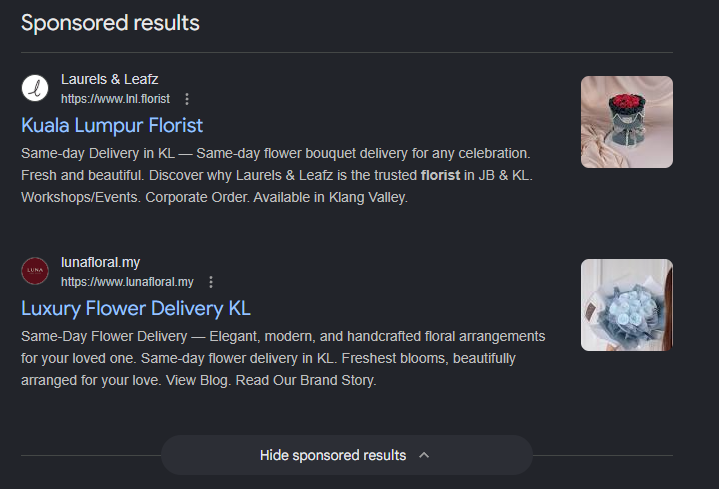
The most common form of SEM is pay-per-click (PPC) advertising, where businesses pay each time when someone clicks their ad. The ads are often appear at the top of SERPs (Search Engine Result Pages) with a “Ads” or “Sponsored” label.
SEO vs SEM: Key Differences
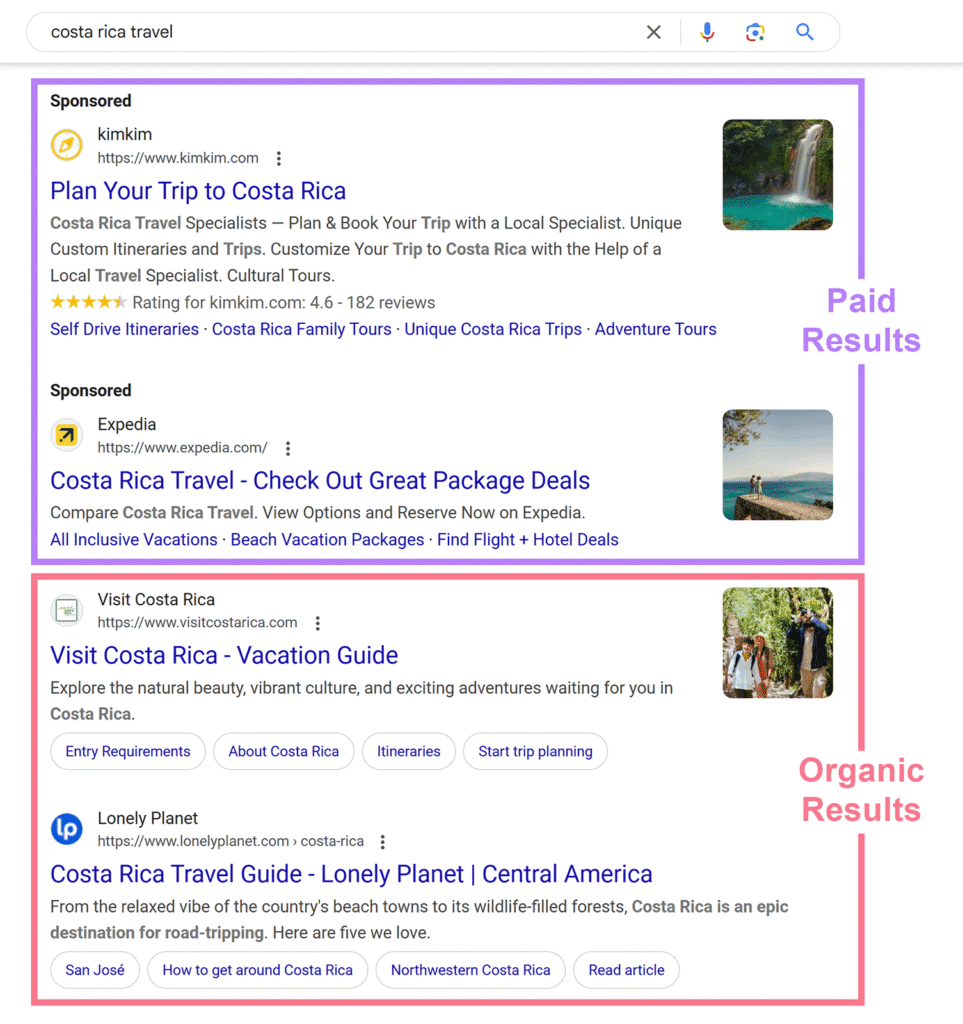
The difference between SEO (Search Engine Optimization) and SEM (Search Engine Marketing) is that SEO focuses on attracting organic traffic (unpaid ads) from search engine, while SEM on both organic traffic and paid ads to attract visitors.
| Factor | SEO | SEM |
|---|---|---|
| Traffic Type | Organic traffic (free) | Paid traffic |
| Cost | No cost per click | Pay for each click |
| Time to Results | Slow (3-6 Months) | Immediate |
| Sustainability | Long-term traffic | Stops when ads stop |
| Placement | Organic search results | Sponsored ads on top |
When should you use SEO or SEM?
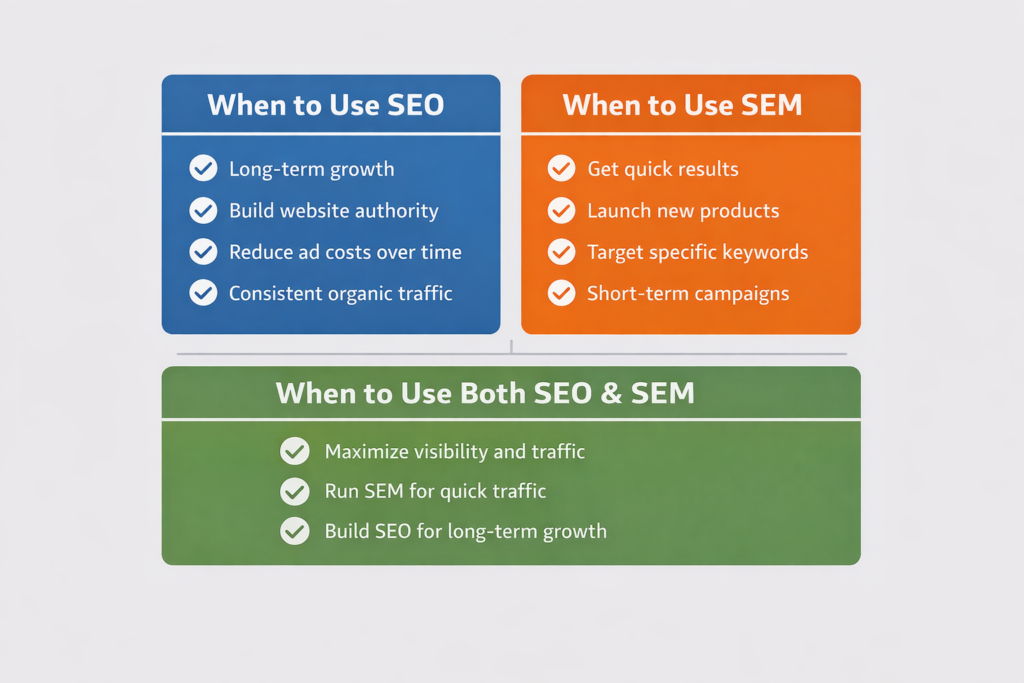
Which one should you use? Well, it depends on your business’s goals, budget, and timeline. Both strategies can increase website’s visibility on search engines like Google, but they are used in different situations depending on whether you want fast and immediate results or slower, long-term results.
When Businesses Should Use SEO?
Businesses should focus on SEO when their goal is long-term growth and sustainable website traffic. By optimizing their website for organic search, they can gradually build authority and trust with search engines, leading to consistent traffic over time. According to zipdo, In 2023, organic search drives 53.3% of all website traffic globally.
For example, websites that publish blogs, tutorials, or educational content typically focus on informational search intent, where users are looking to learn or find answers to specific questions, often using long-tail keywords to search for more specific and detailed information.
When Businesses Should Use SEM?
Businesses should focus on SEM when their goal is immediate visibility and quick results. With paid advertising campaigns such as Google Ads, a website can appear at the top of search engine results almost instantly.
For example, SEM is ideal for local service businesses, course providers, travel promotions, and e-commerce stores. Businesses running limited-time sales, special promotions, or new product launches can use SEM to quickly boost traffic and drive immediate conversions.
Can You Use Both SEO and SEM?
In most cases, the most effective strategy is to use both SEO and SEM. It can help generate quick traffic and immediate results through SEM, while SEO simultaneously builds long-term growth and sustainable organic traffic. Once SEO rankings are strong, businesses can reduce their reliance on paid ads and continue maintaining website traffic through SEO without spending any money on ads.
How Well Does it Go?
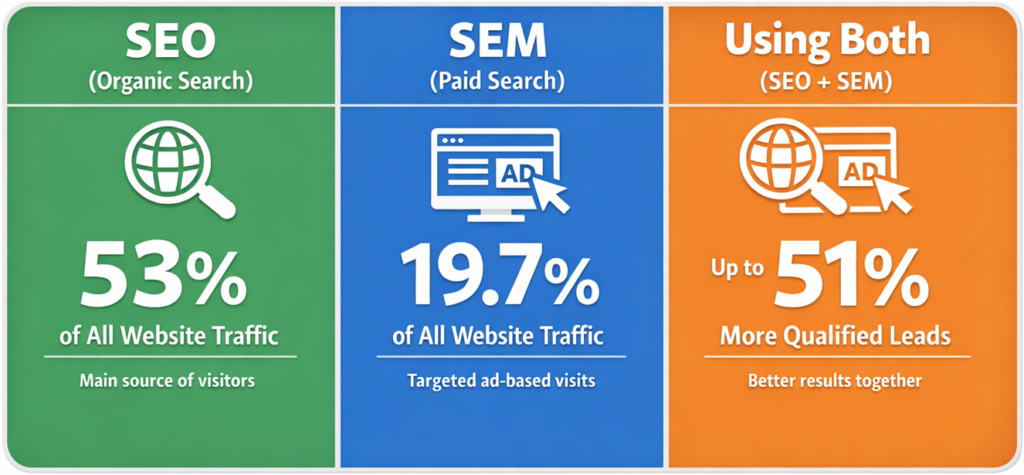
According to SEO Inc, organic search drives about 53% of all website traffic globally, making it the top source of visitors for most websites. Paid search, on the other hand, contributes roughly 19.7% of total traffic, providing businesses with targeted visibility through SEM, according to Smart Insights. When SEO and SEM are used together in a unified strategy, businesses can achieve significantly better results, including up to 51% more qualified leads, compared with relying on either channel alone, as found by SEO Sandwitch